
The 5 AI Video Tools to Know in 2026
Runway, Pika, Veo, Kling, Seedance: every AI model has its strengths and its limits. Here's how to combine them intelligently to produce videos at scale in 2026.
AI video crossed a threshold in 2026. A simple idea can now turn into a video in seconds. But behind the promise, a reality quickly emerges: there isn't one tool, there are many models, each with its own strengths and limits. Understanding the differences is essential… but it isn't enough.
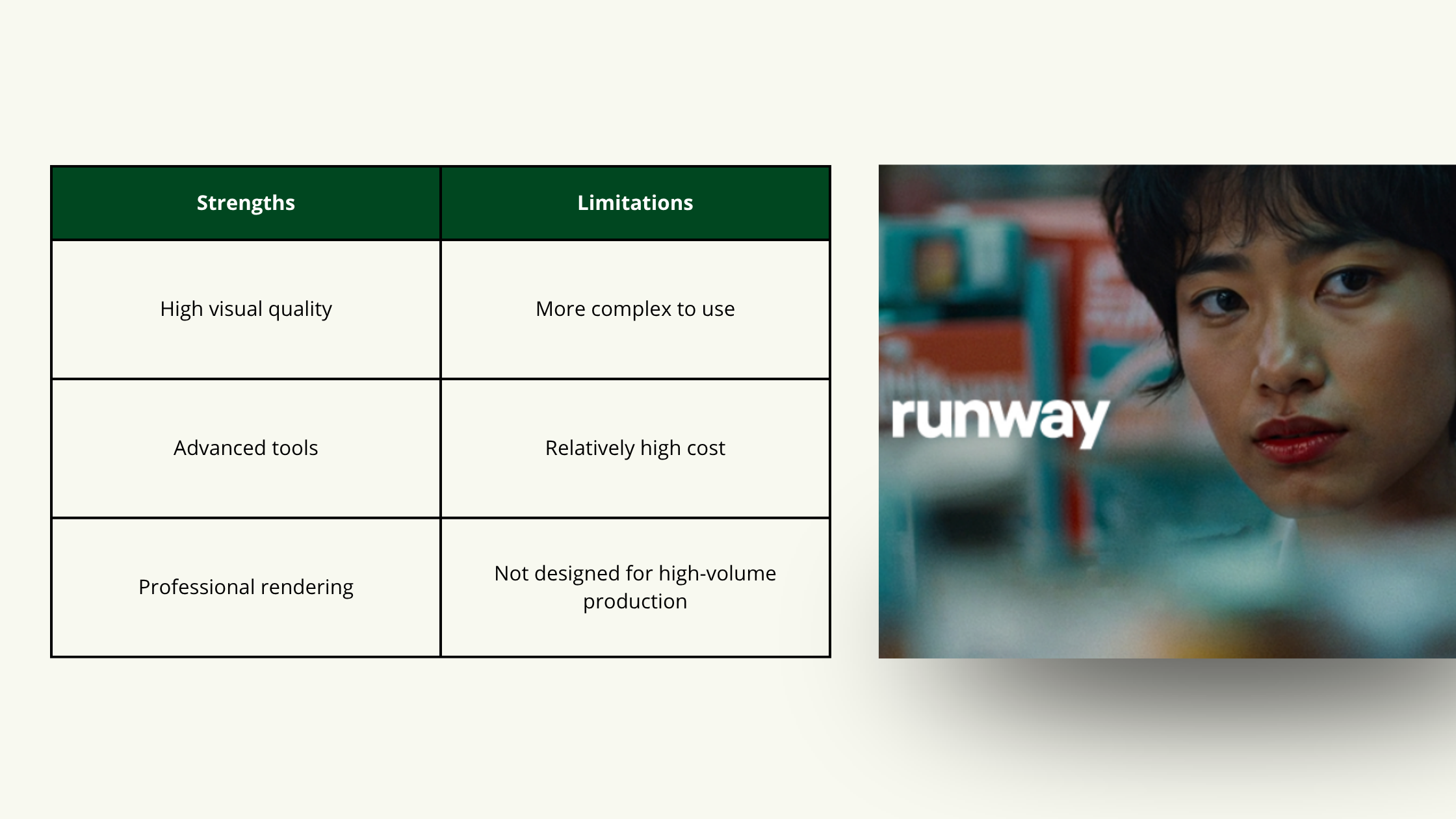
Runway
Runway is one of the market leaders. It generates videos from text with impressive visual rendering, close to cinematic quality in some cases. It's often the go-to tool for creators looking for professional quality and fine control over the final output.
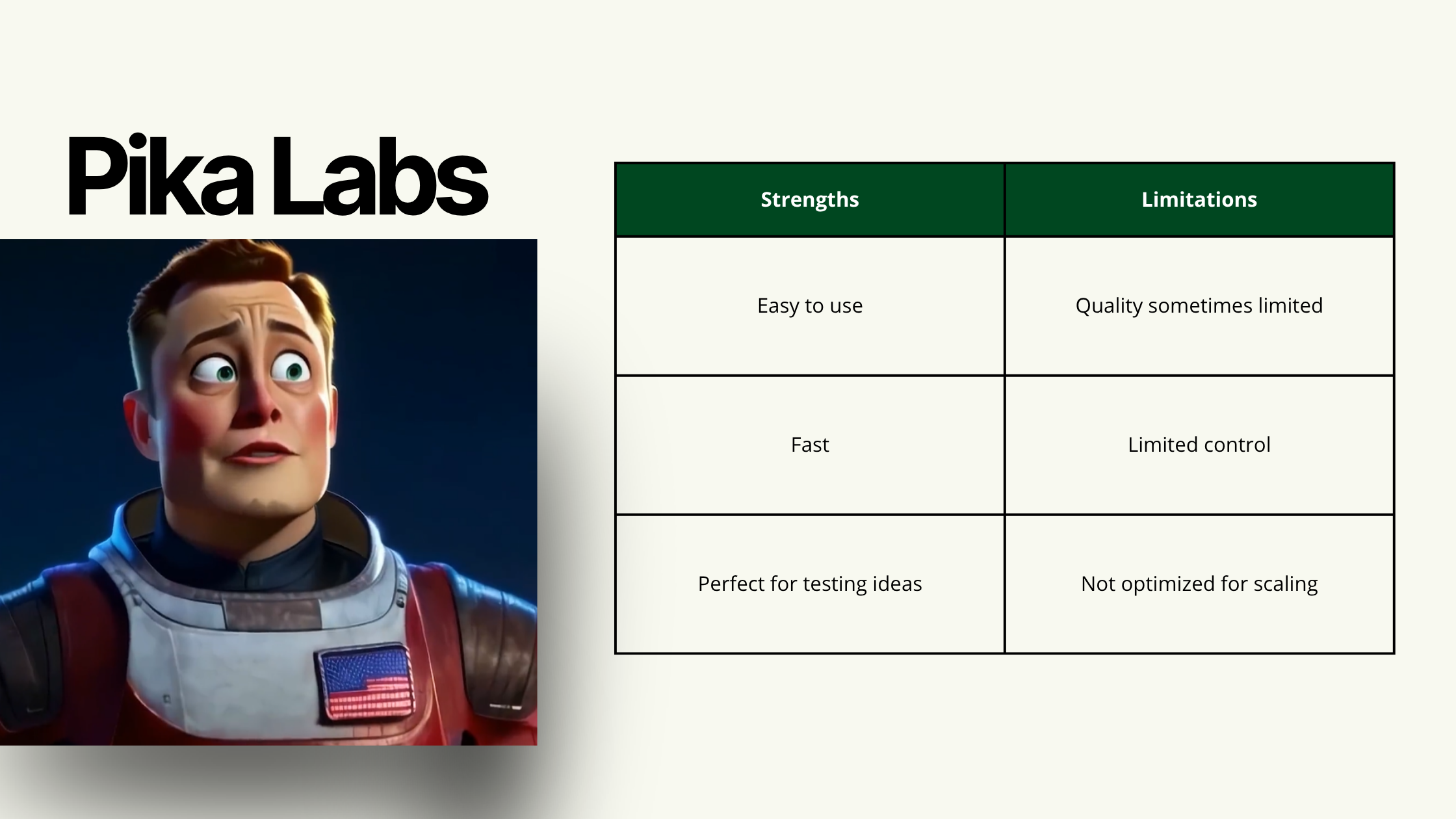
Pika Labs
Pika is perfect for getting started. Simple and fast, it lets you generate videos easily, even if quality and control remain limited. It's an excellent entry point to test ideas and iterate quickly before moving on to heavier models.
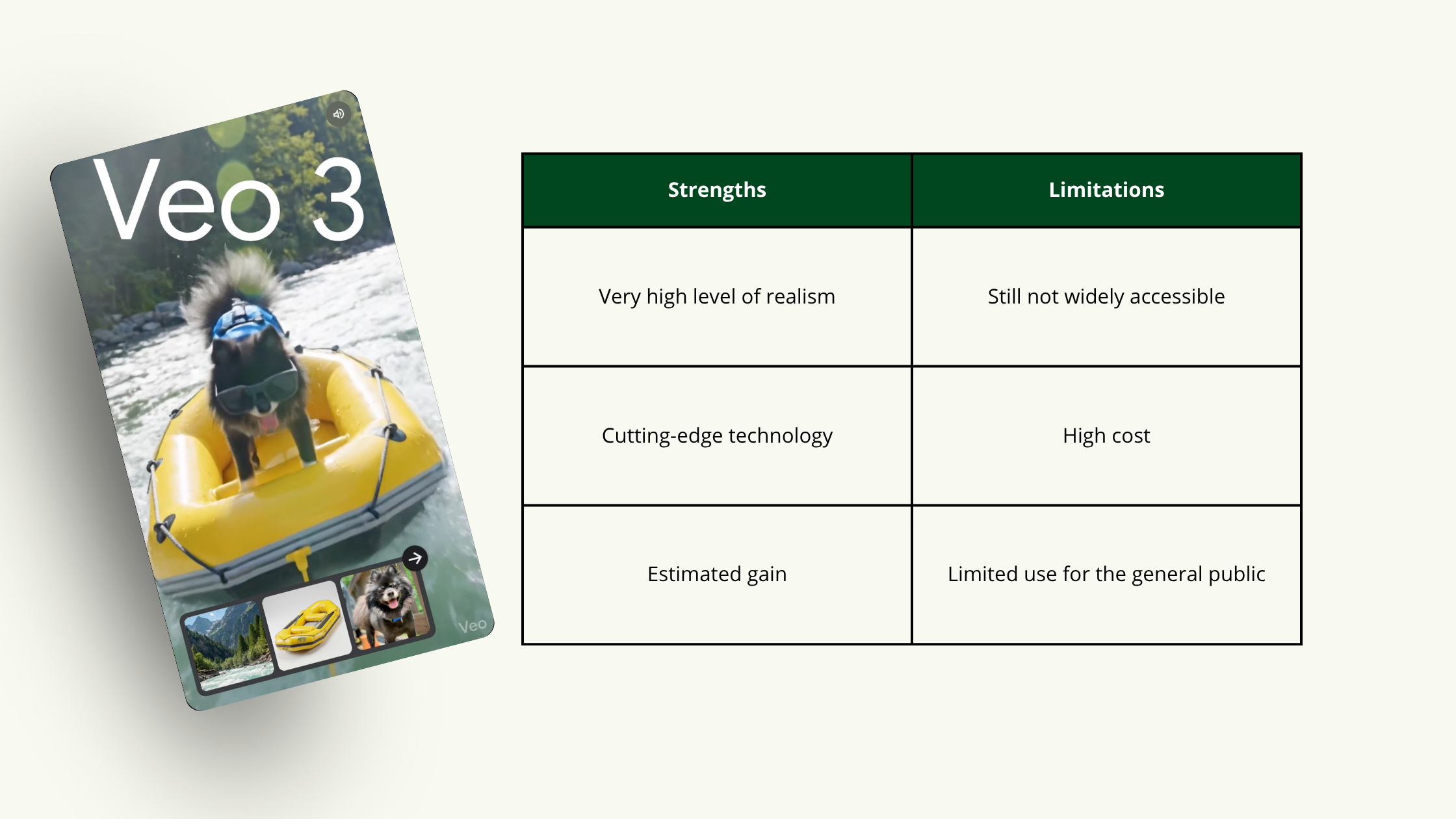
Google Veo 3
Google is pushing hard with Veo. It's one of the most impressive models on the market: it can generate highly realistic videos, close to cinematic standards. In exchange, that quality comes at a cost, and the tool is still not very accessible for mass use.
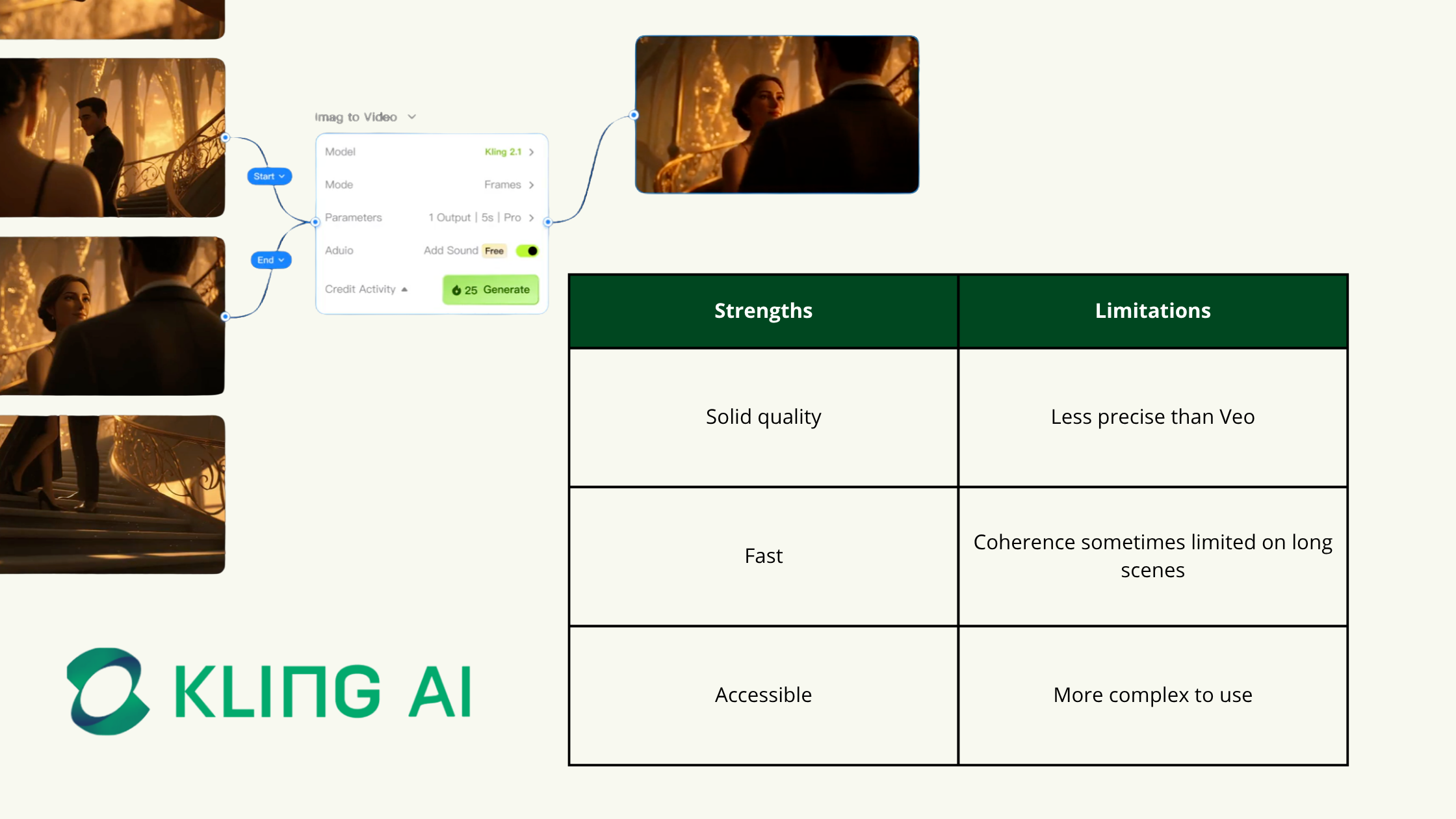
Kling
Kling stands out as an excellent trade-off between quality and speed. Results are solid and the model remains relatively accessible, even if consistency on long sequences can sometimes drop. It's often the right choice when you want to produce in volume without sacrificing rendering.
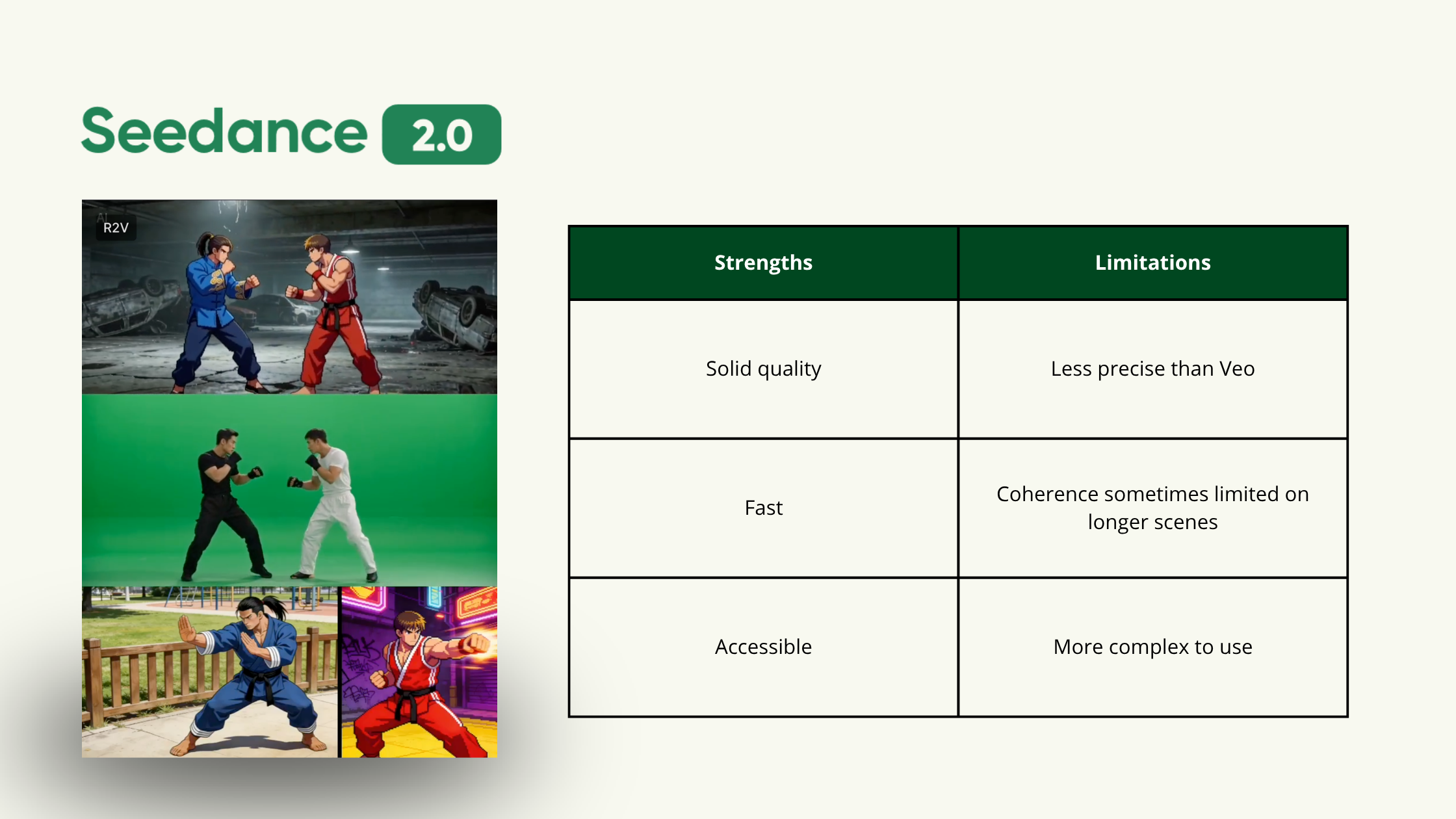
Seedance
Seedance leans more toward creative, stylized outputs. It's particularly interesting for social content or original formats, although it's still evolving. It's the model to keep in mind for short, punchy formats.
The real problem: no single model is enough
Each model is good at one thing:
| Model | Key strength |
|---|---|
| Veo | Realism |
| Kling | Speed |
| Runway | Stability |
| Pika | Simplicity |
| Seedance | Creativity |
But none of them covers the entire video creation process. The concrete result for creators:
- 5 different subscriptions to manage
- time lost switching between tools
- a lack of consistency across outputs
The Vidrale approach: multiple models, one environment
Instead of picking one tool and living with its constraints, Vidrale lets you use several AI models depending on your needs, while keeping a simple, centralized workflow. Script, visuals, voice, editing: everything lives in one place, with no jumping between platforms.
Concretely, instead of paying for 4 or 5 different subscriptions and losing time wiring tools together, you get a single environment designed for efficient production. You benefit from the strengths of each model without the complexity that usually comes with it.
FAQ
What's the best AI video model?
There's no universal "best" model. Each solution was designed with a different goal: some prioritize realism, others speed or ease of use. The right choice depends first and foremost on your use case. If you need highly visual output, some models will be better suited. If your goal is to produce fast and at volume, others will be more relevant.
Should you use multiple AI video models?
Yes — and today it's the most effective approach. No single model covers every need in video creation. Using several solutions lets you leverage the strengths of each and optimize for quality, speed, and throughput at the same time. That combination is what truly enables you to scale.
How do you simplify AI video creation?
The best way to simplify the process is to stop multiplying tools. Centralizing the entire workflow — from script to editing — saves time and removes friction. That's exactly Vidrale's approach: leveraging several AI models inside a single environment while keeping the process smooth and coherent.
Runway, Veo, or Kling: which should you choose?
If you're aiming for a cinematic output and budget isn't a blocker, Veo is unbeatable on realism. For more regular production with a strong quality-to-price ratio, Kling is often the best compromise. Runway remains the reference for demanding creators who want fine control and proven stability. In practice, the best creators don't pick just one: they use whichever model fits the need at hand.