
How to Create 30 TikTok Videos in 1 Day to Post All Month (Without Burning Out)
If you're still making TikTok videos one by one, you're wasting time. The batch workflow lets you produce 30 videos in a day and post consistently all month — without burnout.
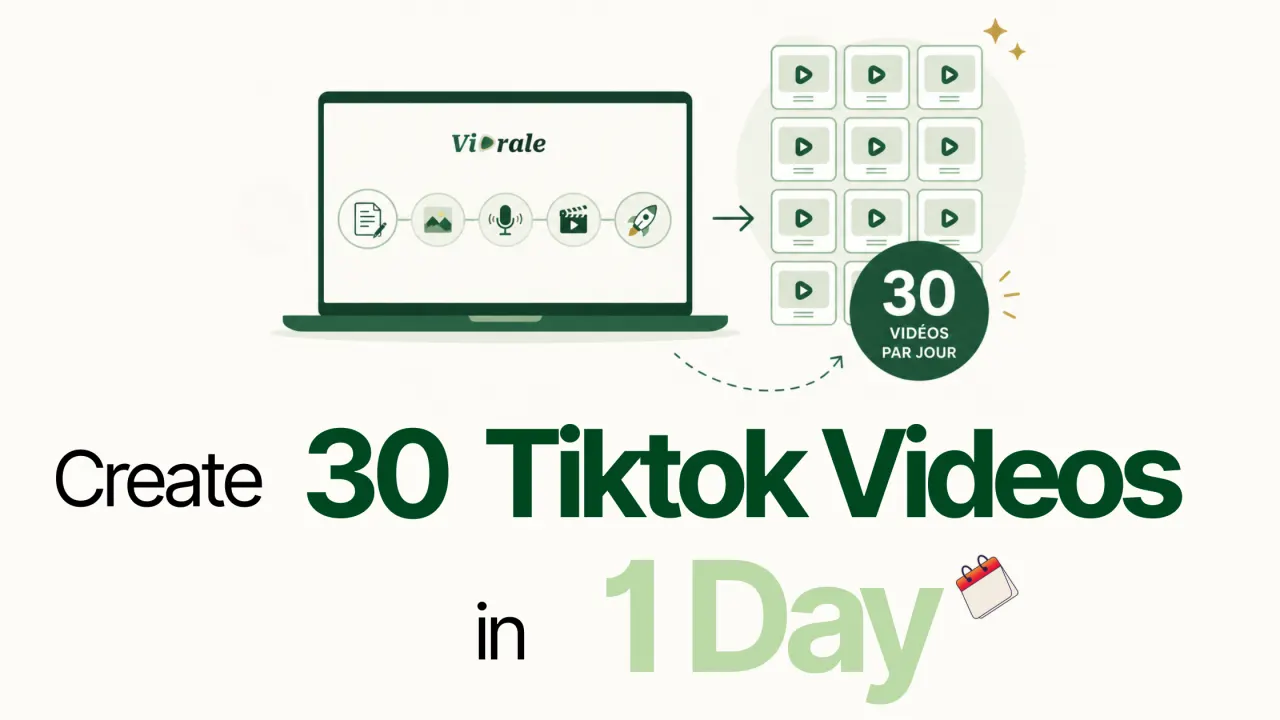
If you're still making TikTok videos one by one, you're wasting time.
In 2026, the creators and brands that grow fastest aren't necessarily the most talented. They're often the ones with the best production system.
Because on TikTok, consistency is a massive advantage. And consistency becomes nearly impossible when every video starts from scratch.
That's why more and more creators are switching to batch creation: producing several videos in a single work session, then posting consistently all week. It's a workflow heavily pushed by AI video tools to accelerate content production.
What is batch content creation?
Batching simply means producing your content in series, instead of creating it one by one.
Instead of working like this:
- Monday: look for an idea
- Tuesday: write a script
- Wednesday: edit a video
- Thursday: run out of inspiration
- Friday: post nothing
You work like this:
- One session to find 15 ideas
- One session to write multiple hooks
- One session to produce several videos
- Then schedule the distribution
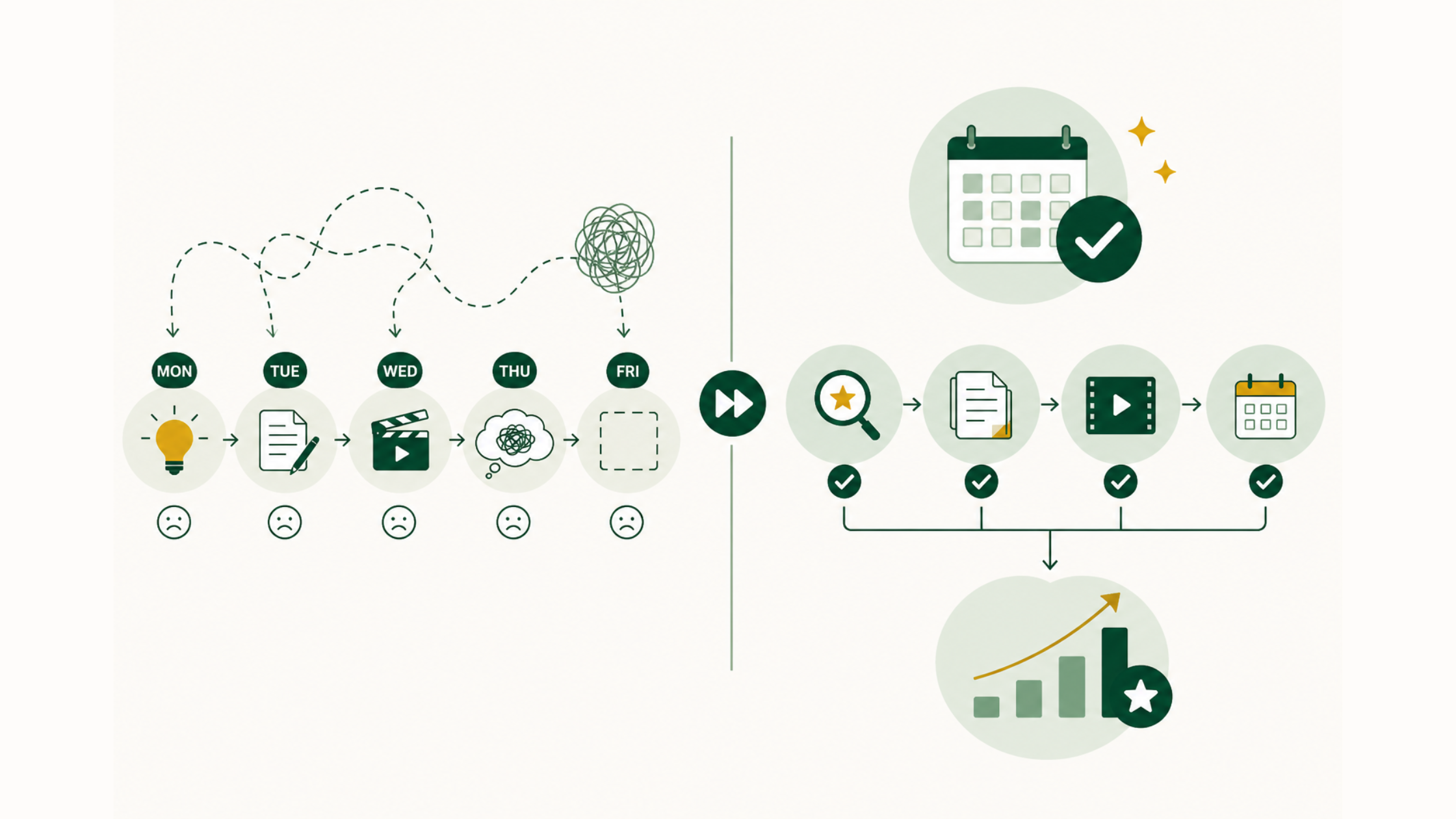
Result: less stress, more volume, more consistency.
Why this method works so well on TikTok
The TikTok algorithm rewards accounts that are active, consistent, and able to ship content regularly.
Batching lets you:
- post every day more easily
- test multiple angles quickly
- spot what works statistically
- scale winning formats
- stop depending on daily motivation
When you improvise every morning, you burn mental energy. When your week is already prepared, you move faster.
That's the exact logic we break down in TikTok Algorithm 2026: Test a Concept in 10 Days — volume beats perfection.
The best batch system in 2026
The most effective model stays simple: 4 clear steps, executed in order.
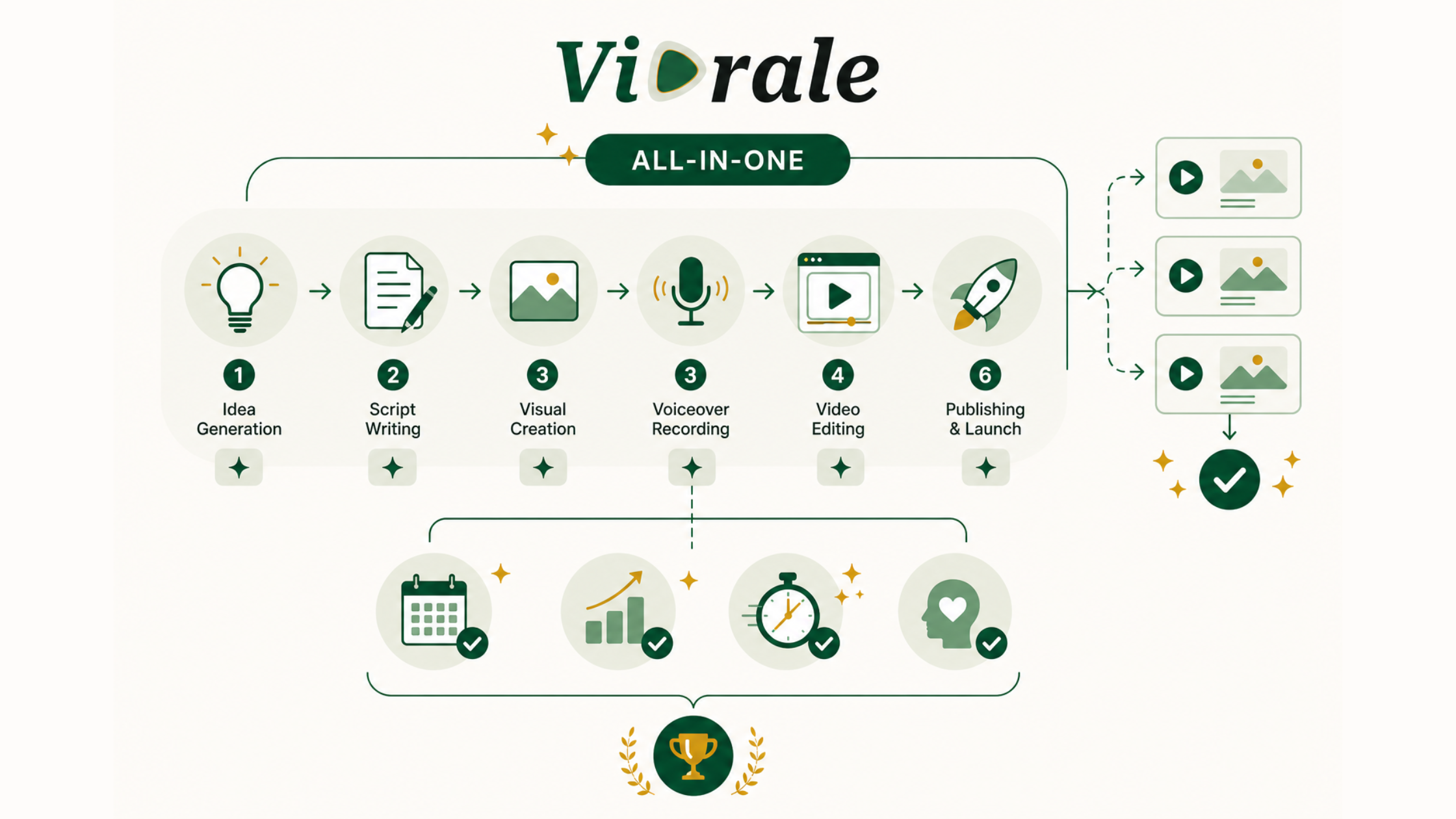
1. Generate ideas in volume
Don't look for the perfect idea. Look for 20 decent ideas.
Use:
- Frequent questions in your niche
- Recurring customer problems
- Industry news
- Viral content to adapt
- Common mistakes in your field
- Comparisons (X vs Y)
- Before / after structures
- Top 3 / top 5 lists
2. Write multiple hooks in one go
The first seconds decide everything. Write 20 hooks in one session:
- "Why nobody tells you this…"
- "The mistake costing you money…"
- "If I were starting from zero…"
- "This detail changes everything…"
- "3 things to know before…"
Why batching hooks works: your brain is in "writing" mode and chains them mechanically. It's 10× more productive than writing 1 hook per day.
3. Produce several videos back-to-back
Shoot or generate multiple videos in the same energy. Same setup, same vibe, same momentum. You save massive amounts of time compared to restarting the entire process every day.
This is exactly where AI video generation tools become decisive: they remove the costly transitions (setup, editing, captions) that make a "manual" video take 2 hours each instead of 10 minutes in batch.
4. Schedule the distribution
Once your content is ready, plan it. You free up your mind for:
- replying to comments
- analyzing stats
- improving the next videos
- growing the business
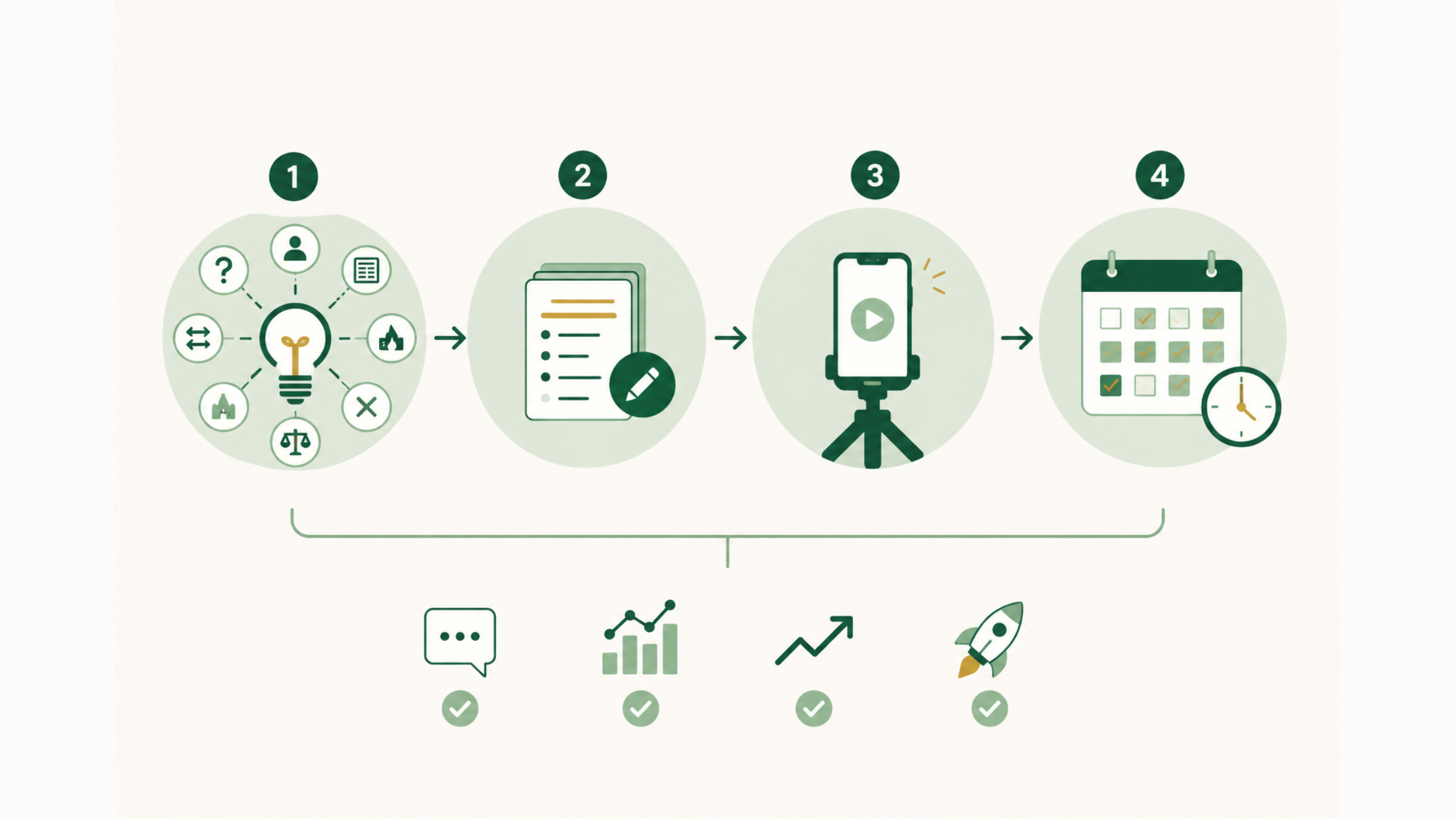
Why most people quit
The problem isn't a lack of ideas.
The problem is operational fatigue.
Looking for a topic, writing, creating, editing, captioning, posting… every day, it gets heavy fast.
Many people quit not because TikTok doesn't work, but because their system isn't sustainable. They last 2 weeks, then the rhythm breaks, then they give up — when a weekly batch could have kept them going effortlessly for 6 months.
Where Vidrale changes the game
That's exactly why Vidrale was built.
Instead of stacking multiple tools (ChatGPT for the script, MidJourney for visuals, ElevenLabs for voice, CapCut for editing, Buffer for scheduling…), the idea is to centralize the process to move faster:
- turn an idea into a script
- generate the visuals
- add the voice
- edit automatically
- ship multiple pieces of content quickly
The goal isn't just to create one video. The goal is to make consistency realistic.
Because a brand or creator who can produce without burning out has a massive advantage. The full workflow is detailed in How to Automate AI Video Creation in 2026.
A concrete batch week example
Monday: 2 hours of production. You prepare 10 videos.
Then:
- 2 videos per day for 5 days
- Testing different hooks
- Multiple topics analyzed
- Constant presence on the platform
While others are wondering what to post, you're already visible.
Over a month, with 4 batch sessions (one per week), you ship 40 videos total. For comparison: a creator in improvisation mode averages 8 to 12 videos per month. You get 3–4× more "shots" — meaning 3–4× more chances of hitting a viral format.
Conclusion
On TikTok, winning isn't always about being more creative. Often, it's about being more structured.
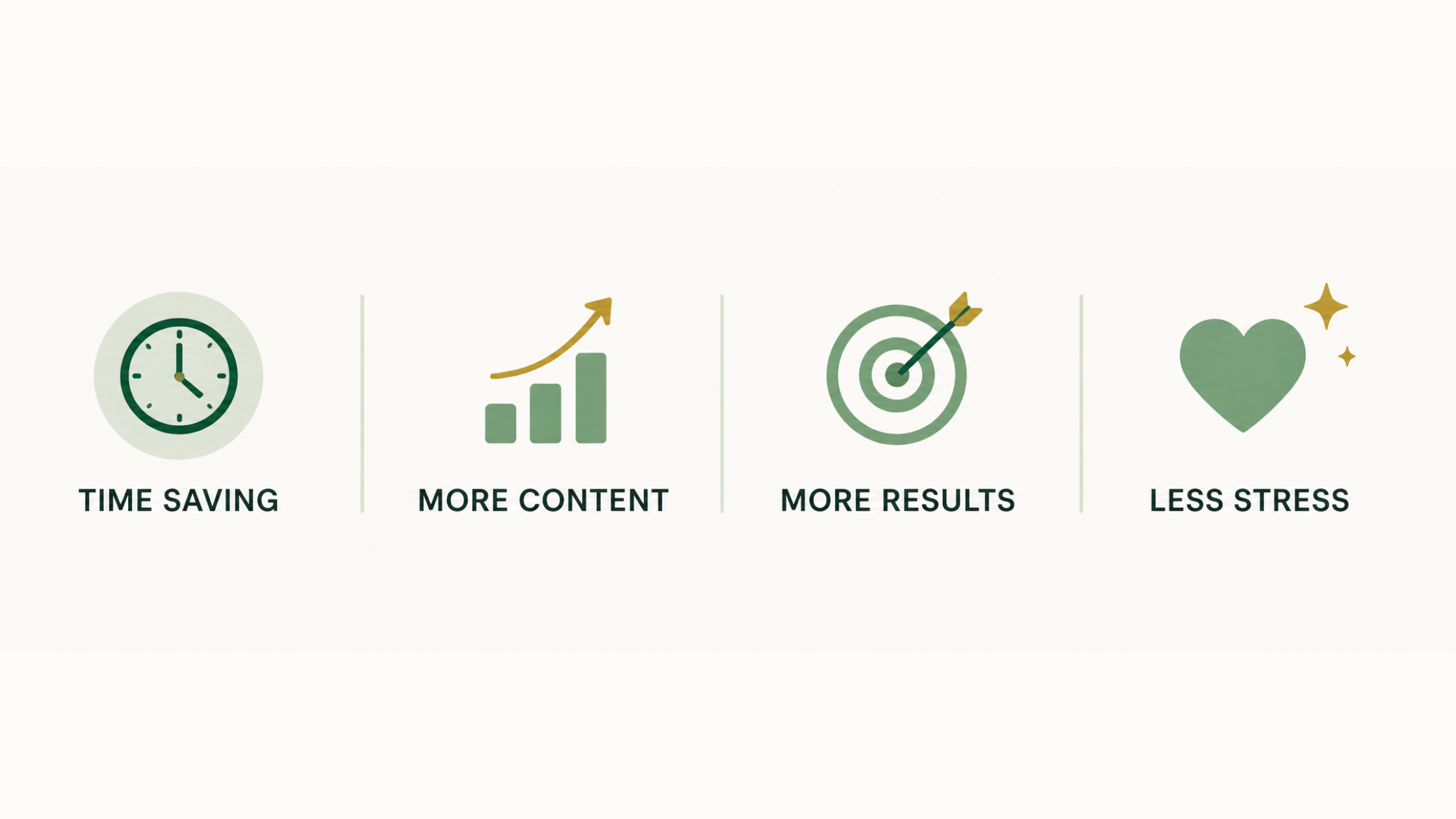
Batch creation gives you:
- more consistency
- less stress
- more volume
- better progression
- a real long-term vision
In 2026, the ones who win won't just be those with ideas. They'll be the ones with a system that turns those ideas into content, again and again.
FAQ
How many TikTok videos can you create in one day with batching?
With an optimized batch workflow and centralized AI tools, 20 to 30 videos per day is a realistic target. Beginner creators usually start with 10 videos in a 2-hour session and ramp up from there. The key isn't raw speed — it's removing the "transition friction" between steps (idea → script → visual → voice → edit).
How long does it take to prepare a week of TikTok content?
With a batch system and AI tools: 1 to 2 hours to prepare 5 to 10 videos. Without a system, the same creator spends 30 to 60 minutes per video, which adds up to 3 to 6 hours a week — usually spread across 5 days in "morning improvisation" mode. Batching literally divides production time by 3.
Does batching kill TikTok content spontaneity?
Not if the system is well built. Batching is about production, not inspiration. You can capture spontaneous ideas all week long (in a note, a drive, a doc) and execute them in batch session. Spontaneity stays in topics and hooks; batching only concerns technical execution.
Is it better to post 1 video per day or 5 videos via batch?
Both work, but batch wins statistically. An account that ships 5 videos per week via batch has the same cadence as one shipping 1 a day — but without burnout, and with the ability to test multiple angles in the same week. Over time (3–6 months), batching produces 2× to 3× more videos than improvisation mode, so 2× to 3× more viral opportunities.
What AI tools should you use to batch TikTok video creation?
The ideal is a centralized tool covering script + visuals + voice + auto-editing. Multiplying tools (ChatGPT + MidJourney + ElevenLabs + CapCut + Buffer) creates transition friction that kills the batch effect. Vidrale is built precisely for this centralized workflow. The full system breakdown is in How to Automate AI Video Creation in 2026.
How long until you see results on TikTok with this system?
First results usually appear between 30 and 90 days of regular batching, or after 60 to 100 published videos. That's exactly the threshold at which the TikTok algorithm identifies you and pushes you to the right audience. It's also the threshold most creators never hit — because they quit at video 15, lacking a system. Batching turns that threshold into an achievable goal without burnout.