
The End of Sora: OpenAI Cuts Costs
Behind the hype, a much deeper problem: cost, scalability, and market reality. Why OpenAI is pausing Sora and what it means for the AI video industry.

AI-generated videos with an unprecedented level of realism, coherent scenes, natural movements, an almost human understanding of the world.
At that point, many thought: "It's over. Cinema, creation, everything is about to change."
And yet...
A few months later, the narrative shifts.
Fewer announcements. Fewer demonstrations. Fewer concrete results.
Not because Sora doesn't work.
But because a much bigger problem emerged:
The model isn't viable at scale.
Sora Marked a Turning Point
Sora wasn't just an improvement. It was a leap.
Where previous AI video tools produced rough clips, Sora delivered:
- long, coherent scenes
- realistic physical interactions
- understanding of complex movements
This wasn't a gimmick anymore.
This was a tool capable of replacing parts of video production.
And that's precisely where the problem begins.
The Real Problem: Massive Cost
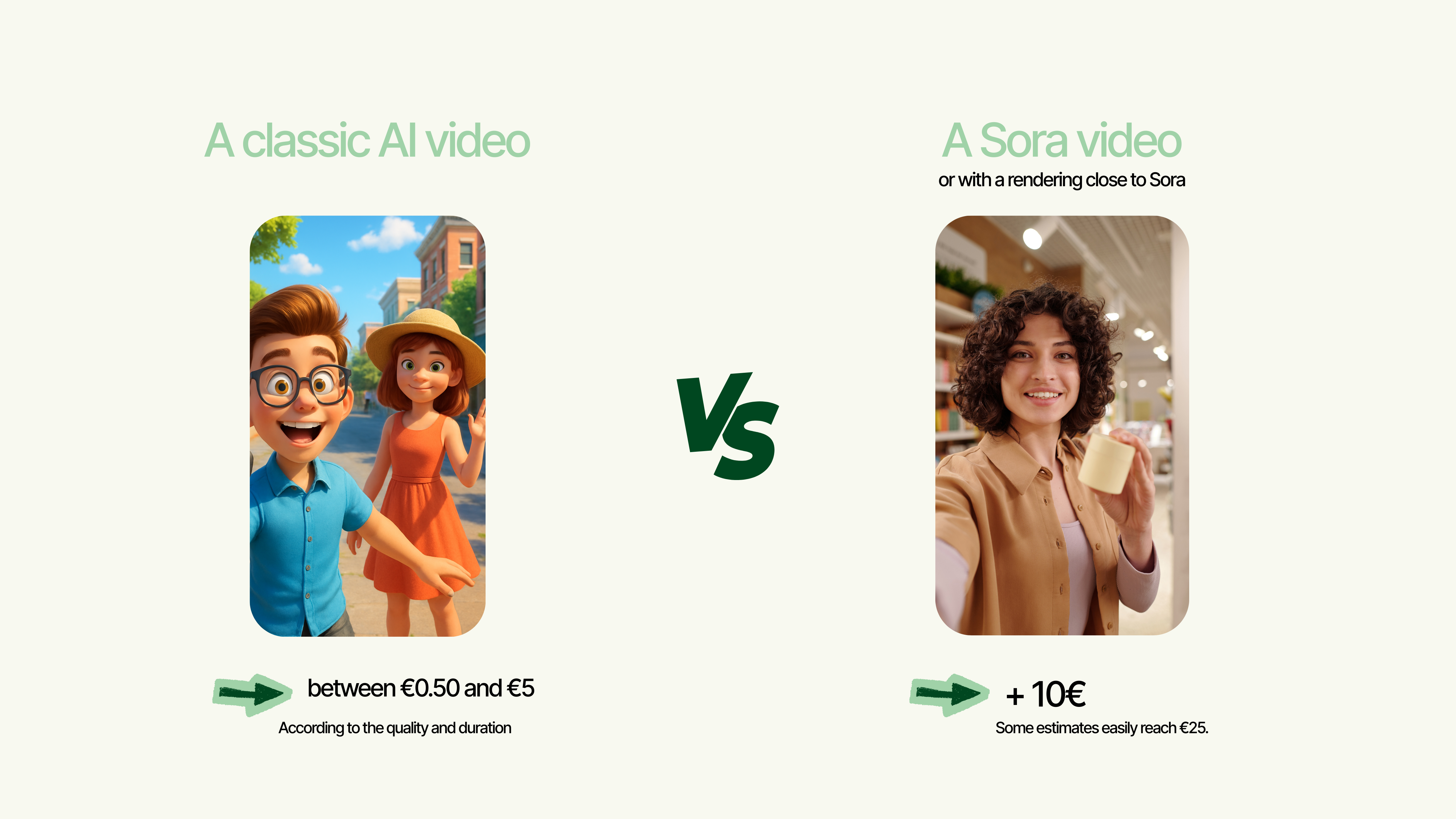
Where a standard ChatGPT request costs a fraction of a cent, video generation requires far heavier resources: high-end GPUs, multiple compute passes, and much longer processing times.
To put it in perspective:
| Operation | Estimated Cost |
|---|---|
| ChatGPT request (text) | ~$0.01 |
| Image generation (DALL-E) | ~$0.04 |
| Video generation (Sora, 10s) | $3 to $8 |
On top of that:
- infrastructure (servers, storage, bandwidth)
- research and development
- optimizations needed to maintain quality
Now imagine this at consumer scale.
If just 1 million users each generate 1 video per day, at an average cost of $5:
That's already $5 million... per day.
No platform can sustain that without an extremely solid business model behind it.
A Reality Check for the Entire AI Video Industry
OpenAI's decision isn't just about Sora.
It's a much broader signal.
A "reality check" for the entire AI video industry.
For months, the narrative was simple: AI would enable ultra-realistic video creation, instantly, at scale.
But reality is more complex.
Behind the impressive demos, several limitations emerged:
- massive compute costs
- still very low profitability
- difficult-to-manage use cases (copyright, deepfakes, misleading content)
And that's exactly what Sora's pause reveals.
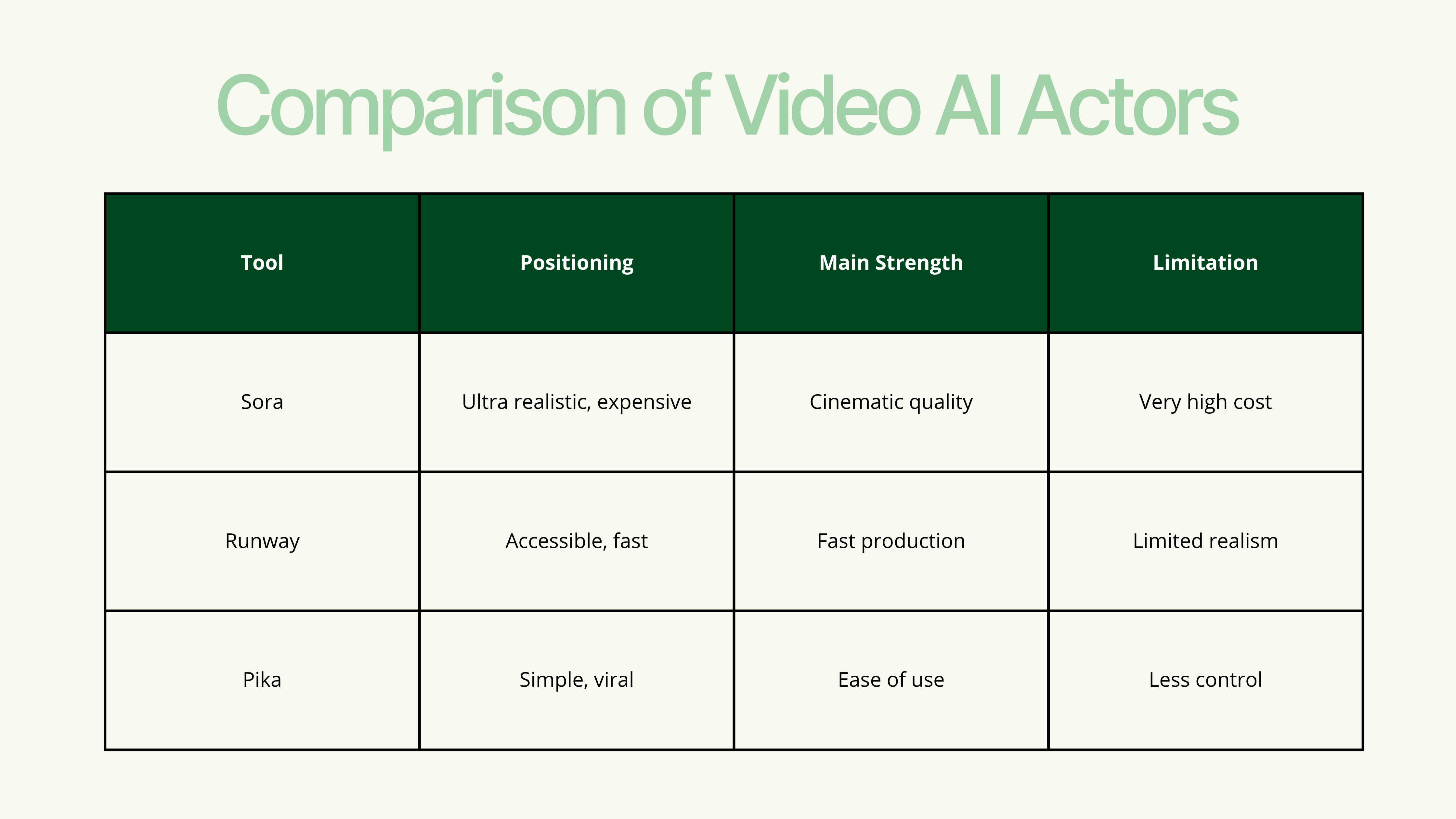
It's not that the technology doesn't work — it's that it's not yet ready for a viable business model.
Some analysts even call it a maturity moment for the industry.
Between Innovation and Economic Reality
What happened with Sora is actually quite classic in the tech world.
An innovation arrives, impresses immediately, creates a wave of enthusiasm and gives the impression everything will change overnight. For a while, attention is entirely captured by the performance and possibilities it opens.
Then comes a second phase, quieter but decisive: the confrontation with economic reality.
In Sora's case, several limits quickly appeared. Adoption slowed after an initial peak, operating costs proved extremely high, and most importantly, it became difficult to turn this usage into a truly profitable model.
The result is simple: even a revolutionary technology can be paused when it can't yet fit into a viable economic framework.
A Decisive Turning Point for AI Video
For a long time, the AI race was all about raw performance. The goal was simple: impress, push boundaries, show what technology could accomplish.
But today, a new logic is taking hold.
The question is no longer just about who has the most spectacular model, but who can build a system that's truly viable and capable of operating at scale.
And this shift in perspective completely reshuffles the deck.
The simplest solutions, the fastest to deploy, and the most optimized are suddenly ahead. The ability to produce efficiently, at controlled cost, becomes more important than the pursuit of absolute perfection.
In this context, the pause around Sora isn't a failure. It's a step.
A transition between a phase of spectacular innovation and a phase of sustainable building.
And as often happens in tech, those who understand this shift first will be the ones who benefit most.
FAQ
Why is Sora so expensive?
Video generation requires far more computing power than text or even images. Each second of video requires generating dozens of coherent frames with movements, lighting, and realistic physical interactions. This uses high-performance GPUs for several seconds or even minutes, which quickly drives up costs. At scale, these costs become unsustainable without a solid business model.
Will AI video replace creators?
No, it will mainly transform how they work. Like the arrival of digital photography or editing software, tools evolve but the creator's role remains central. What changes is production speed and the possibilities offered. Creators who know how to use these tools to produce faster and test more formats will have a significant advantage.
What's the future of AI video?
The future won't necessarily be dominated by the most realistic videos, but by the most efficient solutions. We'll gradually see tools emerge that can produce videos quickly, at low cost, while being high enough quality to capture attention. The challenge won't just be quality, but the ability to produce at volume, test, and continuously optimize.