
Faceless video: creating content that hits without showing your face
Faceless video is revolutionizing solo content creation — here's everything you need to know to get started without a camera or camera shyness.

What is faceless video? The trend that's freeing creators everywhere
Have you ever thought "I have great ideas, but I really don't want to be on camera"? You're not alone. That's exactly where faceless video comes in.
So what is faceless video? By definition, it's a video content format where the creator never appears on screen — no face, no head, sometimes not even a voice. Instead: animations, screenshots, text, AI-generated voiceovers, or footage that never puts you in the frame.
This anonymous content trend has exploded over the past two years, driven by solo creators who wanted to build an audience without sacrificing their privacy — or without spending hours under a ring light.
Faceless video isn't a shortcut. It's a full-blown strategy. It frees up your time, protects your identity, and lets you focus on what actually matters: the value you deliver.
Welcome to the game.
Why more and more creators are going faceless
You may have already thought: "I want to create, but I don't necessarily want to show my face to the whole world." You're not alone. Faceless video is booming right now, and it's no coincidence.
The first and most obvious reason: anonymity. Being able to share ideas without exposing your private life, without worrying about what your coworkers or family might think — that's genuinely liberating. You create from your comfort zone, without stressing about lighting or what's in the background behind you.
But there's something even more powerful: scalability. When your content doesn't depend on your appearance or physical presence, you can produce faster, delegate creation, and even automate certain steps. Your channel becomes a real system, not just a series of performances.
Creator productivity skyrockets when you're no longer held back by the camera. And creative freedom opens wide — you can test niches, shift your tone, and explore without ever feeling trapped inside a persona.
That's the real appeal: creating without constraints.
The faceless formats that perform best in 2024
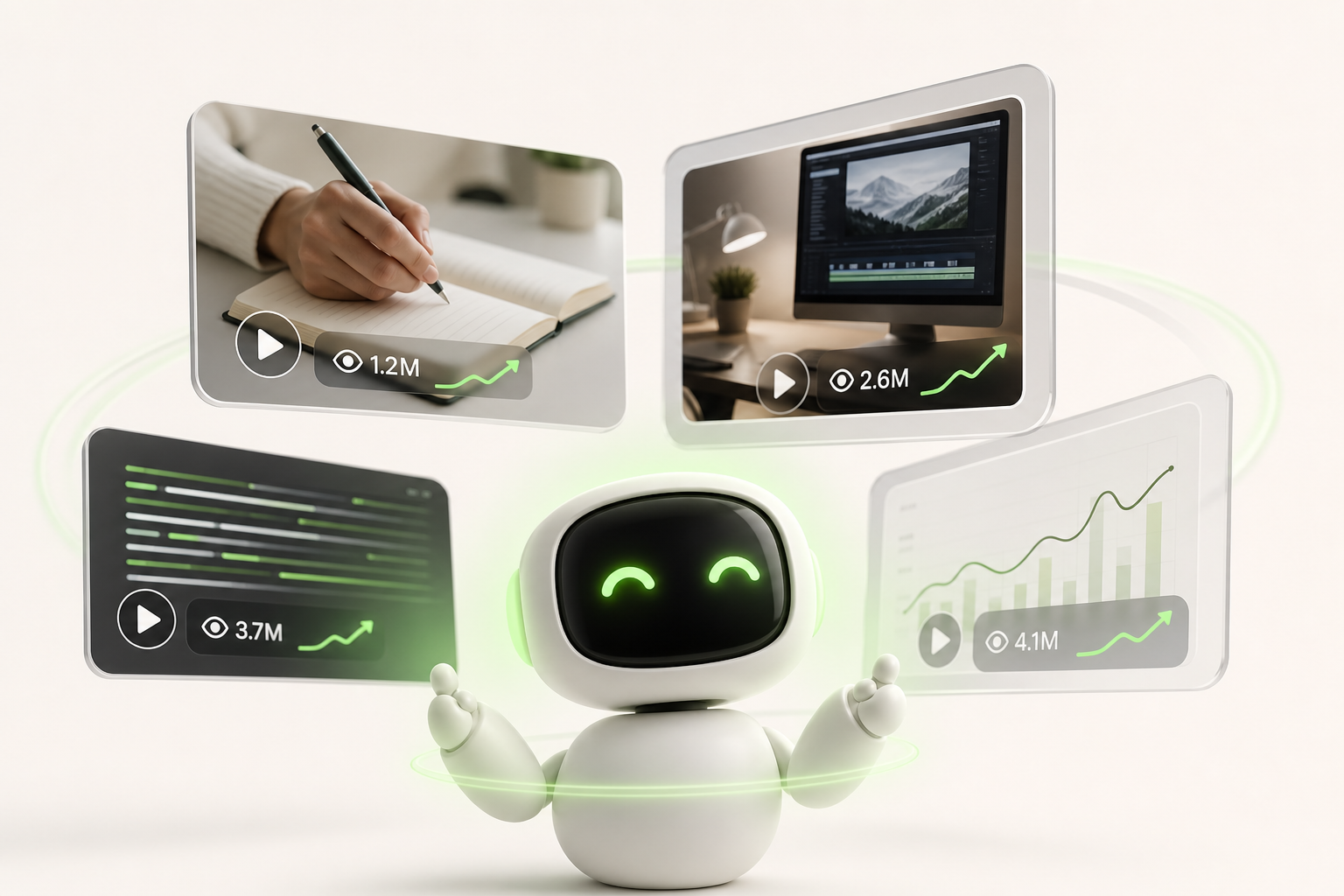
Good news: you don't have to reinvent the wheel. Certain video formats have already proven their effectiveness — you just need to pick the one that fits your world.
On TikTok and Instagram Reels, compilations absolutely crush it — fun facts, inspirational quotes, rankings — because they generate retention and shares almost automatically. A voiceover laid over images or animated text creates that sense of closeness without ever putting your face on screen.
On YouTube Shorts, screen recording has emerged as a dominant format, especially for tech tutorials, finance tips, or tool demos. Easy to produce, and highly actionable for the viewer.
Motion design — animated text, smooth transitions, graphic elements — works across all three platforms and delivers a polished look even with free tools like CapCut or Canva.
The real question isn't which format to choose, but which one you can stick with over time. That's the real secret behind consistency.
How to make videos without showing your face: a step-by-step process
So practically speaking, how do you make videos without showing your face? Here's the solo workflow I use, from idea to publish.
- Script first. Everything starts here. A clear script = a clear video. Write sentence by sentence, as if you're talking to a friend.
- The voiceover. Record somewhere quiet — even a closet works. Your voice drives everything else.
- The visuals. Screenshots, royalty-free B-roll footage, animated slides — choose what fits your message, not just what looks pretty for no reason.
- The edit. Sync your visuals to your voiceover, cut the silences, add subtitles. CapCut or DaVinci Resolve are more than enough.
- The quick review. Watch it through once before exporting. You'll spot the weak spots in thirty seconds.
This whole process fits in a single morning. That's the real freedom of the faceless format.
The essential tools for building your faceless system
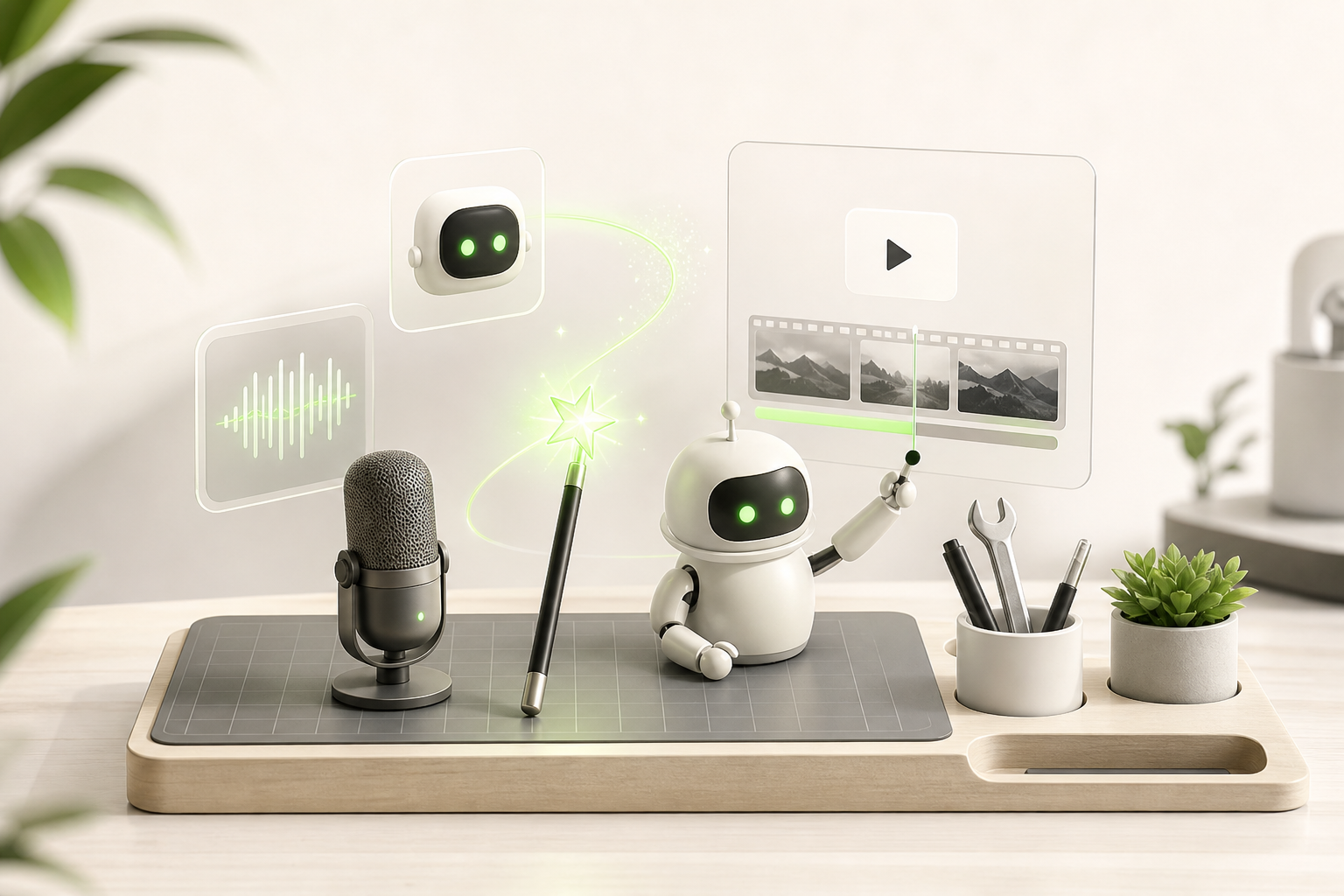
When you're starting your faceless system, the temptation is to test 40 different tools and end up paralyzed. Avoid that trap. A lean but solid stack is more than enough.
For voice generation, ElevenLabs is the gold standard: the voices sound human, not robotic. Murf.ai is a solid alternative if you're looking for gentler pricing.
On the stock visuals side, Pexels and Storyblocks cover 90% of your B-roll needs without breaking the bank. For AI-generated images, Midjourney still leads the pack on quality.
The real game-changer is automated editing. CapCut (free) or Descript let you sync a voice to visuals in just a few minutes. Runway ML goes further if you want stylish transitions.
As a solo creator stack, aim for simplicity: one voice tool, one visual source, one editing app. That's it. These AI tools used together intelligently are your real competitive edge — not the number of subscriptions you're paying for.
The mistakes that sink beginner faceless channels

When you're starting out, the most classic faceless video mistakes can cost you weeks of effort without ever understanding why things aren't taking off. Here's what sabotages most beginner channels:
- Terrible audio: audio quality kills a video before the TikTok, Instagram, or YouTube algorithm even has a chance to push it. A basic microphone changes everything.
- A fuzzy niche: trying to talk about everything means talking to no one. Pick a precise territory and stick to it.
- Generic content: copying trends without a personal angle drowns your channel in the crowd.
- No visual consistency: colors, fonts, overall vibe… your audience should recognize your world within a single second.
- Ghost-like consistency: posting three videos then disappearing for two months sends a negative signal to the algorithms.
The good news? These mistakes are easy to fix once you can see them clearly. The key is not letting them discourage you after your first few posts.
Monetizing a faceless channel: what actually works
Good news: the faceless model isn't just a creative hack — it's also a real revenue engine. As an independent solo creator, you can diversify your income streams without ever appearing on screen.
Monetization flows through several channels that naturally complement each other:
- Affiliate marketing: recommend tools or courses related to your niche and earn a commission on every sale you generate.
- Sponsorships: once your audience is established, brands pay to be featured in your videos — no face required.
- Digital products: templates, guides, mini-courses… create once, sell continuously.
This is where the format's true power lies: passive income. A video you published six months ago keeps pulling in clicks, sales, and subscribers. Your content works while you sleep.
Faceless is ultimately one of the most scalable models out there for a solo creator. You don't need to show your face to be profitable.
Get started: your first faceless content begins here

You now know the essentials: faceless video is about filming ideas, not your face. It's about telling a story with visuals, a voice, a rhythm — and letting the content speak for you. No ring light needed, no superhuman courage in front of the camera.
The real question is no longer if you can get started, but when.
For solo creators who want to publish on TikTok, Instagram, or YouTube without getting lost in hours of editing, Vidrale is an AI video generation platform built exactly for that. You show up with your idea, and it helps you turn it into something concrete, fast.
- Your first topic? You already have it in mind.
- Your audience? They're waiting for you somewhere out there.
- The tool? It's right here.
The only thing still missing is the first step. So take it today — not perfectly, just honestly. The best faceless creators all started with a slightly rough video. Yours could be next.
Conclusion
You don't need to be in front of the camera to make a real mark online. Faceless content is a kind of freedom — the freedom to build a solid audience around your value, not your appearance.
The creators who are crushing it today have figured out one simple thing: what holds attention is a well-packaged idea, not a familiar face.
And to go further without burning out, the right tools make all the difference. Vidrale, the AI video generation platform built for solo creators on TikTok, Instagram, and YouTube, is designed to transform your ideas into high-impact content — no friction, no camera.
The time to get started is now. Your audience is waiting, even if they haven't seen you yet.
Create your videos with Vidrale
Turn your ideas into publish-ready videos for TikTok, Instagram, and YouTube — no editing, no camera. Vidrale generates attention-grabbing videos for you in just minutes.