
Selling AI Videos to Companies in 2026: The Underused Business
Companies need content but don't know AI. How to launch an automated video production service, the 4 formats that sell, and how much you can charge.

Creating content has become essential for businesses. Being visible on TikTok, Instagram, or through ads isn't a bonus anymore — it's a direct growth lever. The problem: producing videos is still long, expensive, and complex. That's exactly why most businesses fail at it.
But today, something changed. Thanks to AI, you can produce videos fast, without editing, and at scale. And yet… very few people are exploiting this opportunity yet.
A largely underused opportunity
Most businesses know they must produce content. But they:
- don't know the tools
- don't have the time
- or don't know what to create
They're looking for someone to do it for them. And that's where a huge opportunity opens up.
Today, a single person can produce as much content as a small agency — provided they have the right system.
What businesses really want
Businesses don't want "videos." They want to capture attention, build interest, generate sales. To do that, they need specific formats.
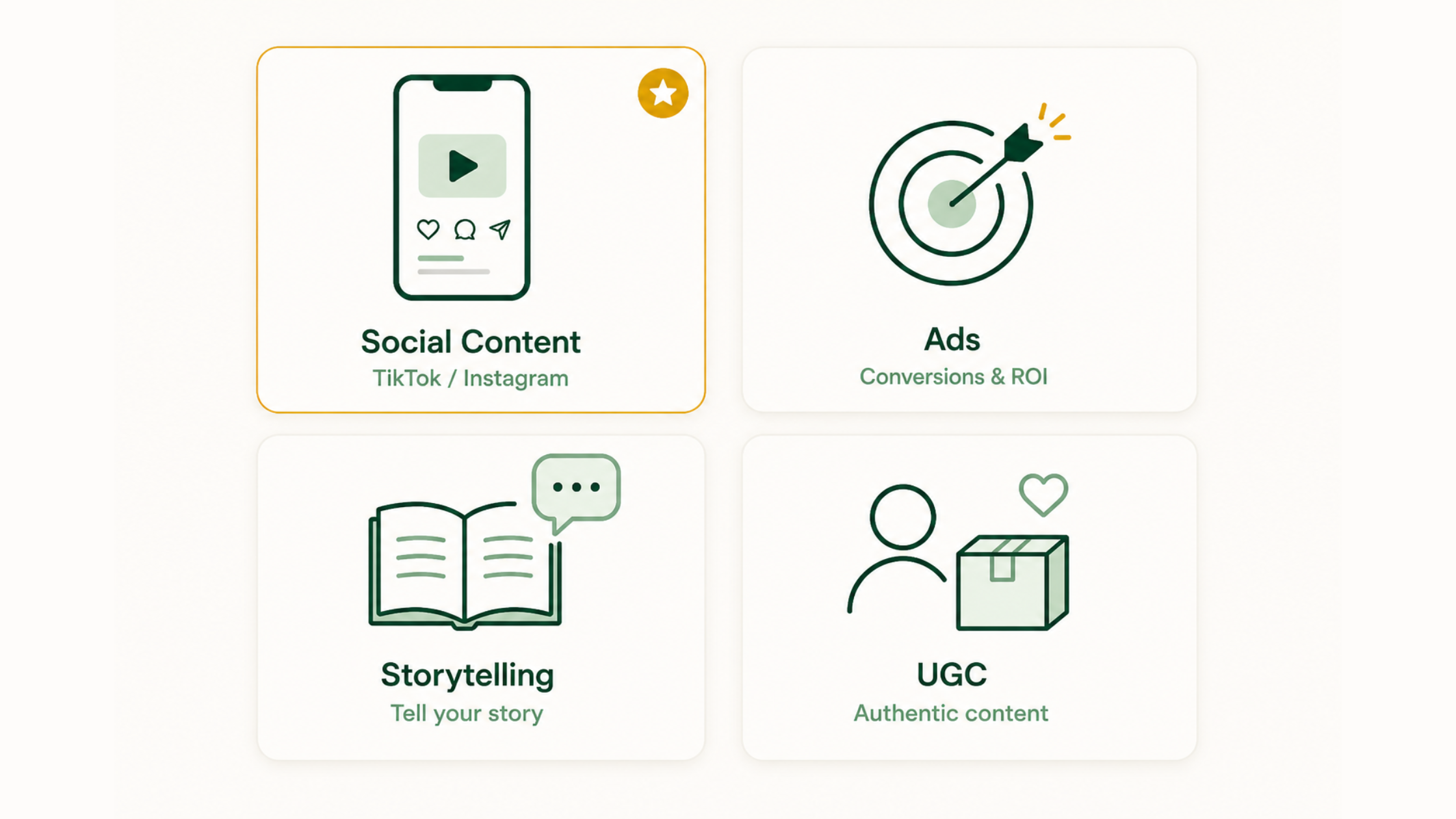
Social media videos (TikTok / Instagram)
Short, fast videos designed to be watched and shared. They build audience, visibility, and presence.
Creative ads
Ads have changed. Today they're videos that look like organic content… but with a conversion goal. Fast hook, clear message, immediate impact.
Brand storytelling
Businesses need to tell a story: why they exist, what they bring, what makes them different. That's what builds trust.
Product UGC (User Generated Content)
Videos that simulate real product use — natural, simple, effective. Today it's one of the highest-performing formats in paid social.
Why AI completely changes the market
For a long time, creating a video was a heavy process. You had to organize a shoot, mobilize gear, go through multiple editing steps… and often hire a team. Result: time, costs, and production that's hard to repeat consistently.
Today, that logic has completely flipped. An idea is enough.
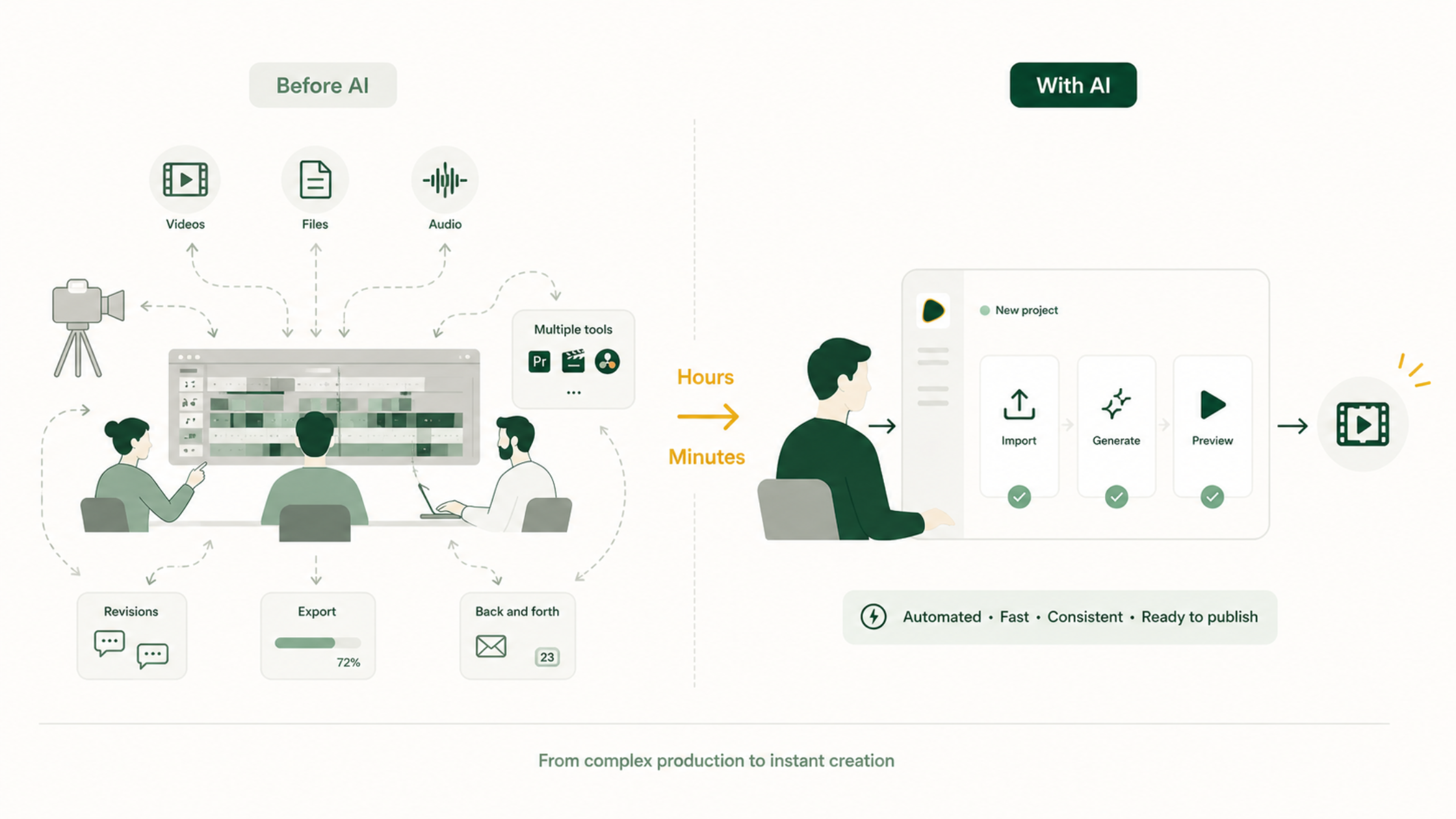
With the right AI tools, you can now turn a simple concept into a complete video without going through traditional steps. Concretely:
- generate an optimized script in seconds
- create visuals adapted to your message
- add a natural-sounding voiceover
- assemble everything automatically
…without manual editing.
What used to take hours — even days — can now be done in minutes. You're no longer producing one video: you're building a system that produces many, fast and continuously.
The real edge: speed
In this business, speed is a massive advantage. Why? Because businesses:
- test continuously
- swap their ads often
- need to publish regularly
If you can produce fast, you become indispensable.
The problem with classic agencies
Traditional agencies still operate the old way:
- long timelines (2 to 4 weeks per video)
- high costs ($1,500 to $5,000 per video)
- limited production (low monthly volume)
They're not adapted to the rhythm of social media. Today, a business prefers 20 simple videos over 1 perfect video. That's your playing field.
The Vidrale approach
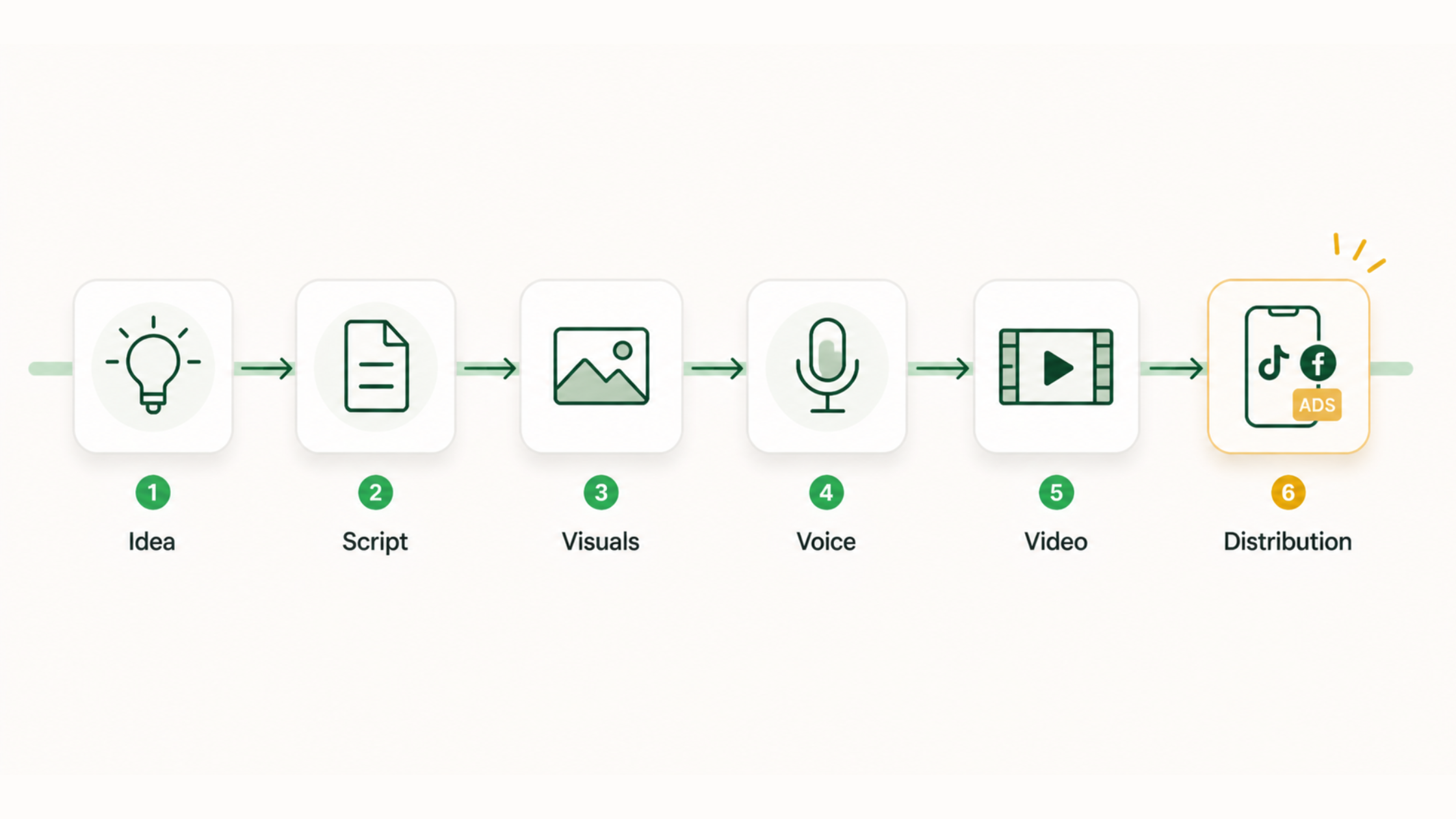
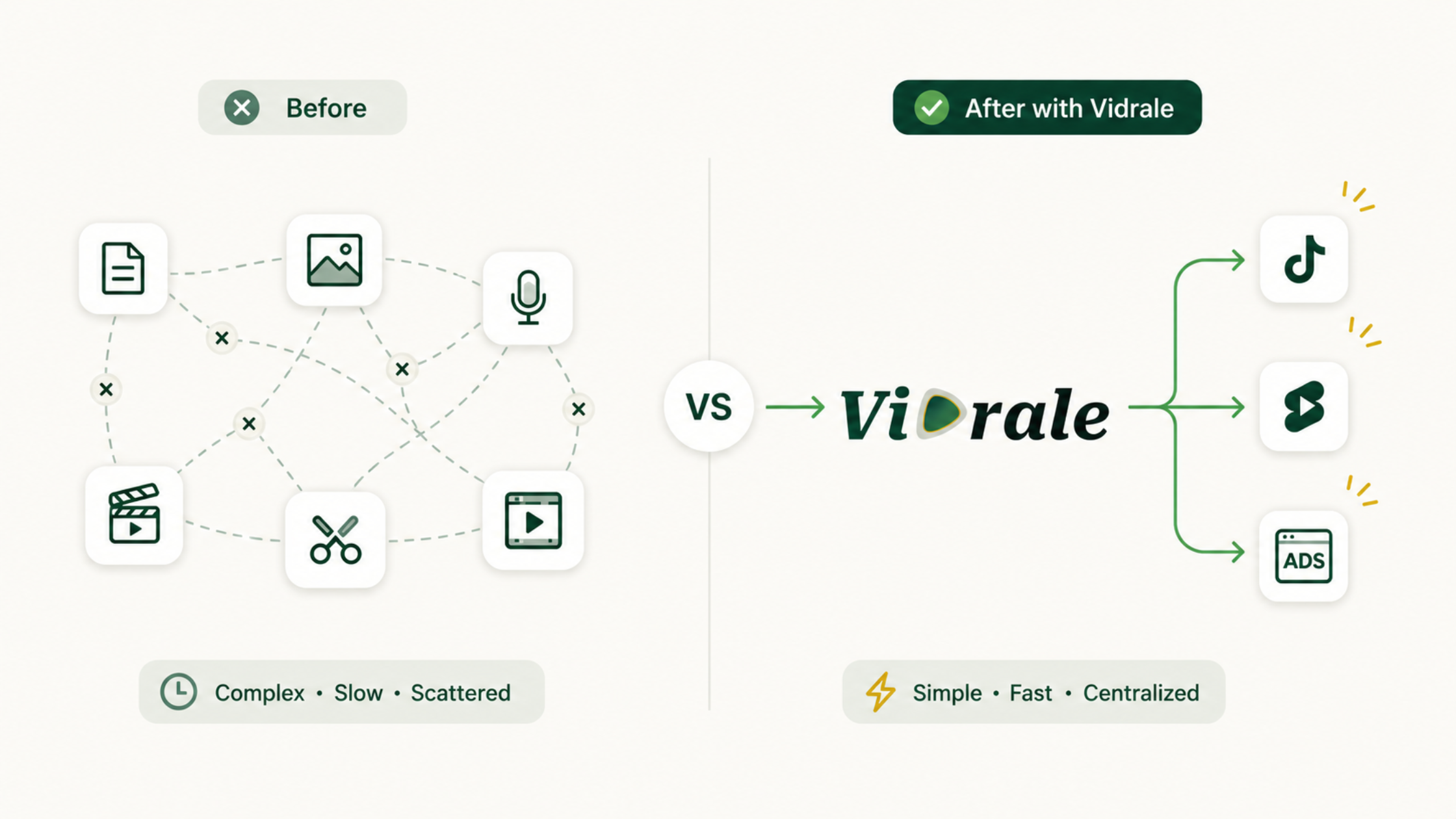
That's exactly why Vidrale was built. Instead of using multiple tools, everything is centralized.
You can:
- turn an idea into a video
- automate every step
- produce fast
- keep style and brand consistency
…without editing, without complexity.
How much can you earn with this business?
Here's where it gets concrete. The simple offers that sell from month one.
| Pack | Volume | Monthly price |
|---|---|---|
| Social media | 12 videos / month | $300 – $1,000 |
| Creative ads | 10 videos / month | $500 – $2,000 |
| Storytelling | 4–6 premium videos | $300 – $1,500 |
| Product UGC | 15 videos / month | $500 – $2,500 |
Realistic example
With just 3 clients:
- 1 client at $500
- 1 client at $1,000
- 1 client at $1,500
= $3,000 / month.
And with an automated system, you can scale easily. At 10 clients averaging $1,000 = $10,000/month, while staying solo.
Why now is the right time
We're in a transition phase. Businesses need content but don't yet know AI. That gap creates an opportunity — exactly like the arrival of the web in 2005, or social media in 2012.
In 18 months, the market will be saturated. Today, it's still largely empty.
How to get started fast
You don't need to be an expert. Here's the simple plan.
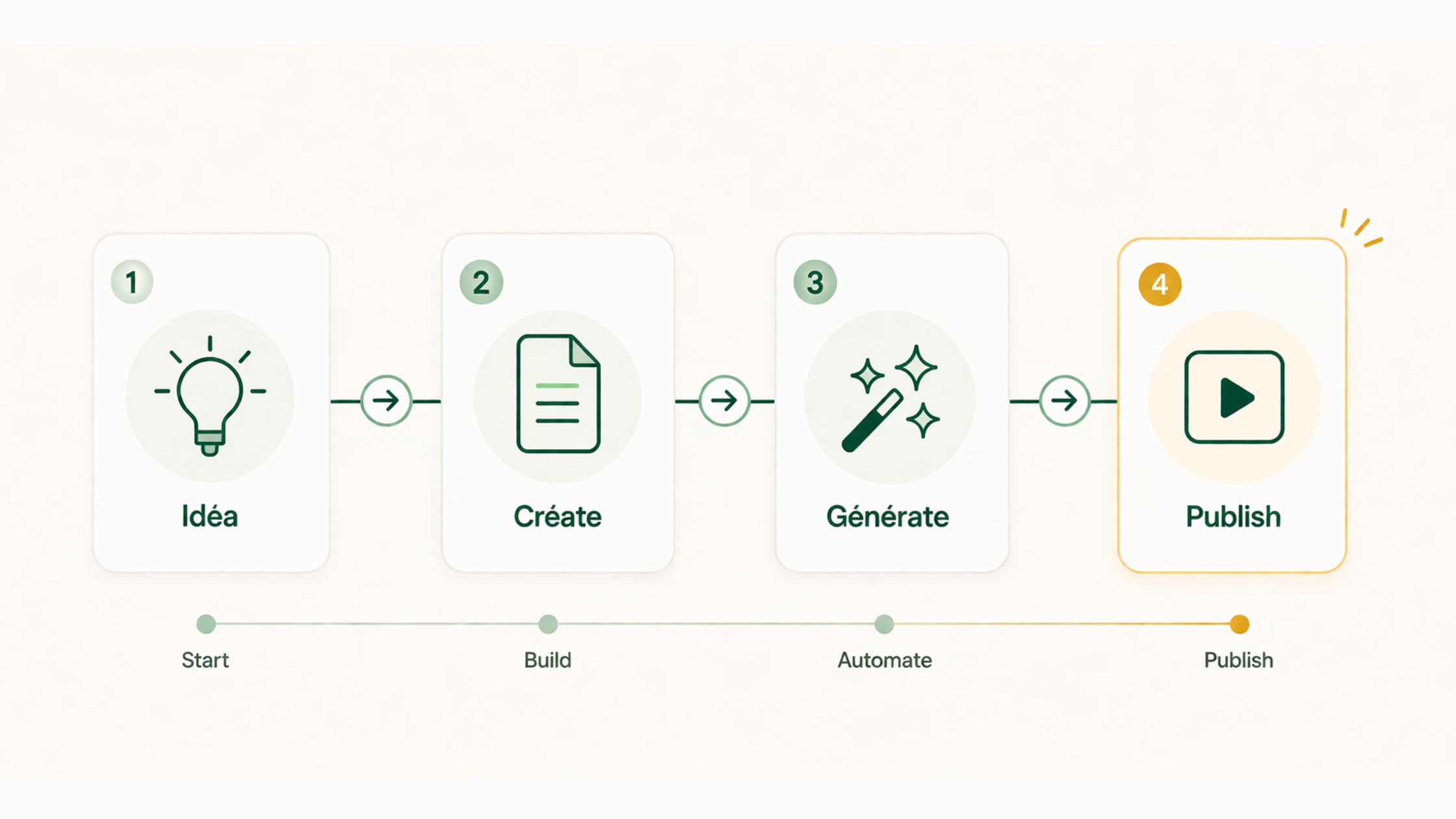
- Pick a niche — local restaurants, e-commerce, coaches, real estate, SaaS… pick one where you already know the vocabulary.
- Create 5 to 10 examples — videos for fictional businesses in your niche, used as portfolio.
- Offer a simple package — monthly pack, clear price, no custom quotes early on.
- Reach out to businesses — Instagram DMs, email, LinkedIn. Aim for 20 contacts per day.
The key is to act fast. The full volume-production method is detailed in How to Automate AI Video Creation in 2026.
Conclusion
Creating AI videos for businesses isn't just a trend. It's a new business.
Today you can produce content without editing, automate your work, sell your services — and build something scalable. The entry ticket is low, the market is mature, and serious competition isn't here yet.
Vidrale lets you start right now: you describe the idea, AI does the rest, and you deliver in minutes what an agency used to deliver in 3 weeks.
FAQ
How much can you charge for AI videos in 2026?
Pricing varies by format and niche. Social media pack (12 videos/month): $300 to $1,000. Creative ads pack (10 videos): $500 to $2,000. Product UGC pack (15 videos): $500 to $2,500. Premium storytelling: $300 to $1,500. With 3 well-positioned recurring clients, you target $3,000 to $6,000/month.
Do you need to be a designer or video editor to sell AI videos?
No. The job no longer requires those technical skills — it requires understanding the niche, finding the right hooks, and delivering at volume. The tool (Vidrale, for example) handles script, visuals, voice, and editing automatically. Your key skills shift to: marketing sense, client understanding, execution speed.
Which kinds of businesses buy this service?
Local businesses (restaurants, gyms, coaches), e-commerce (D2C, qualified dropshipping), early-stage B2B SaaS, real estate agencies, brands with visual products (cosmetics, food, tech). All of them need video volume but don't have time to produce. That's exactly the window where your service brings the most value.
How do you find your first clients without a portfolio?
Create 5 to 10 "spec" videos for fictional (or real, without contacting yet) businesses in your target niche. Use them as portfolio. Then: Instagram DMs to less-active accounts (they know they need it), targeted LinkedIn outreach, posts on your own account showing the process and the results. Aim for 20 prospects per day for 30 days.
What's the difference between a classic agency and an AI freelancer?
Classic agencies deliver 3 to 5 videos / month at $1,500–$5,000 per piece, with 2–4 week timelines. The AI freelancer delivers 15 to 30 videos / month at the same global price, in 24–72 hours. The difference isn't raw quality — it's volume and consistency, which is exactly what TikTok, Reels, and ROAS-driven ads reward.
How many clients can you handle solo with an AI workflow?
With a well-tuned centralized workflow, 8 to 12 recurring clients is realistic solo, at 12 to 30 videos per month per client. Beyond that, you either raise prices (natural filter) or delegate prospecting / client management. Not production — production stays automatable.